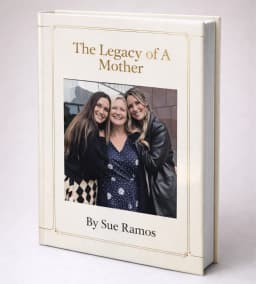
Manufacturer image · not our photo
A CLOSER LOOK · memory book gift
How Does Memorygram Work? A Step-by-Step Look
How does Memorygram work? A plain look at the weekly-question process, the phone-interview option, and whether Memorygram is legit.
We earn a commission if you buy through this link. It does not change the price you pay. Check the seller for current price, compatibility, and return conditions.
How does Memorygram work, step by step?
If you're wondering how does Memorygram work, the short answer is: it's a guided interview process that turns into a printed book. It's not an instant product. It unfolds over weeks.
Here's the process as described on Memorygram's own offer page:
- Questions get sent to the storyteller. Each week, questions arrive by email, text, or phone call. Questions can be picked from a library or written by the buyer.
- The storyteller answers. They can respond by speaking, writing, or texting, and they can add photos. Answers and photos can be edited later, per the offer page.
- The book gets printed. Once the chosen questions are answered, everything is compiled into a hardcover book with a customizable cover.
Buyers can choose up to 60 questions, and they can set how often those questions are sent, according to the offer page. So the pace is somewhat in your control.
The key thing to understand: this is a slow, ongoing conversation, not a one-shot purchase. That's the design. If your storyteller engages with it, stories accumulate week by week until there's enough to fill a book.
The four ways to answer
The offer page lists four ways a storyteller can respond:
- Typing
- Voice-to-text
- Text message
- A phone call
The phone-call option is the most notable. Per the offer page, a real interviewer calls the storyteller, asks the questions, and records their spoken answers. The storyteller never has to touch a keyboard.
That flexibility seems aimed at older storytellers or anyone who doesn't want to sit at a computer. According to the maker, the idea is to meet people where they're comfortable, whether that's talking on the phone or tapping out a text.
There's also a modern touch: a QR code printed in the finished book lets family replay the original audio from phone interviews, per the offer page. So the printed page and the storyteller's actual voice can live in the same place.
What working means for a story service
"Does it work?" means something different here than it does for a gadget or a supplement. Memorygram is a production and interview workflow. So the real question is whether the process actually gets someone's stories into a finished book.
The mechanics described above — weekly prompts, multiple answer formats, printing into a hardcover — are the offer page's own description of how it runs. We want to be clear: we have not tested Memorygram ourselves. Treat this page as an explanation of the stated process, not a verified outcome.
A few things we can reasonably infer:
- The process is only as good as the participation. How complete or polished the final book turns out likely depends on how much the storyteller shares each week.
- Someone who answers every prompt with detail will produce a richer book than someone who gives one-line replies.
- The editing feature helps — answers can be revised later, per the offer page — but it can't create stories that were never told.
So "does it work" splits into two questions. Does the machinery run as described? The offer page says yes, but we haven't verified it. Will it work for your family? That depends almost entirely on your storyteller.
Is Memorygram legit?
Worth asking, and worth answering carefully.
The offer page is Memorygram's own direct-to-consumer site, sold through a GiddyUp partner offer page. That's a common structure for online products and doesn't tell you much either way on its own.
What we can point to:
- The maker describes Memorygram as accredited by the Better Business Bureau, citing its US-based operation. That's the maker's claim. If BBB accreditation matters to your decision, verify the current status directly with the BBB before ordering.
- The offer page mentions a money-back guarantee. However, the exact terms weren't detailed in the text available to us. Check the current guarantee wording on the offer page — what's covered, what isn't, and how to make a claim — before you buy.
Our practical advice for any online-only purchase applies here too: keep records of your order, screenshots of the guarantee terms, and any confirmation emails. If you ever need to make a claim, you'll want the specifics in writing.
None of this settles the question definitively. It's what's stated by the maker, plus standard steps you can take to protect yourself.
Where the process could fall short
Every service has failure points. Here's where this one could go sideways:
- An unengaged storyteller stalls the whole thing. If the storyteller skips or delays the weekly prompts, the book takes longer to finish. Gaps in answered questions mean gaps in the story. There's no way around this — it's a participation-based product.
- The timeline is unclear. The offer text available to us doesn't specify a production or shipping timeline for the finished book. If you're hoping to give this as a milestone gift — a birthday, a holiday — build in extra buffer time and ask the maker directly how long printing and delivery take after the last answer.
- Some claims are the maker's positioning. Statements like being the only memoir company with a call option are the maker's own descriptions. We haven't verified that against competitors, and it shouldn't drive your decision on its own.
- Not everyone wants to share this way. If your storyteller isn't comfortable discussing personal history over the phone or through online prompts, this format may not suit them. Some people open up in person; others freeze when they know they're being recorded.
None of these are dealbreakers. They're just the honest friction points of a process that depends on a real person telling real stories over real time.
Bottom line
Based on the offer page's description, the process is straightforward: weekly prompts sent by email, text, or phone; four flexible ways to answer, including a live phone interviewer; editing along the way; and a printed hardcover book with a QR code to replay recorded audio at the end.
Whether it "works" for your family comes down to one thing more than anything else: whether your storyteller will actually engage with the weekly questions. The machinery can be perfect and the book still thin if the answers don't come.
We have not tested the finished book quality ourselves. Before buying, we'd suggest verifying two things: the current BBB accreditation status, and the exact terms of the money-back guarantee on the offer page. Treat both as things to check, not settled facts.
If your storyteller likes to talk, this format could suit them well. If they're reluctant or private, consider whether they'd respond better to a different approach — and ask the maker about timelines if the book is meant for a specific date.
ALSO IN THESE GIFT LISTS
Sources and research scope
Seller-information assessment, not a hands-on test. Facts come from the seller offer page as fetched on the source-check date; no independent testing was done.
- Memorygram seller information · checked
Before ordering, record the exact model, what is included, and the delivered price with shipping, any subscription or replacement costs, and return postage. Read the return conditions for opened or used items and the deadline. A return window is not a guarantee of results or a cost-free trial, and a sale percentage is not evidence of value.